
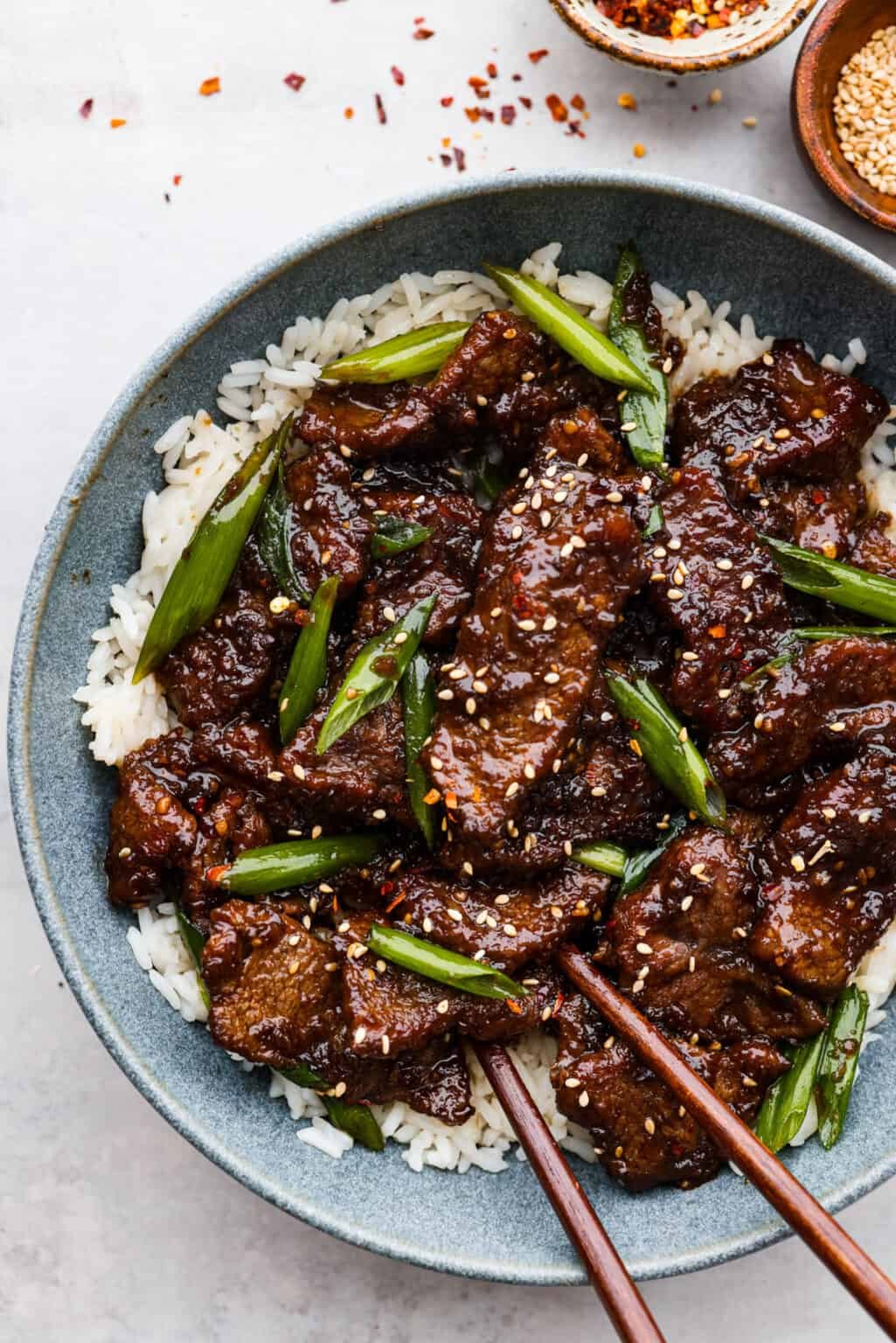
You know that moment when you take a bite of something and immediately think, I need to make this at home?
That’s exactly what happened the first time I had Mongolian beef at a restaurant. The sauce was sticky, savory, slightly sweet, and packed with so much flavor that ordering takeout for the rest of my life felt like the only logical option.
Except — here’s what nobody tells you — it’s incredibly easy to make at home. And it tastes even better.
This recipe takes about 30 minutes from start to finish, costs a fraction of what you’d spend on delivery, and the sauce? It will make you want to pour it on everything. Rice. Noodles. Your hand. Truly.
Stick around because there are a few tricks in here that make a massive difference in how this turns out. 👇
What Is Mongolian Beef, Exactly?
Here’s a fun fact: Mongolian beef isn’t actually from Mongolia.
It was created in Taiwan and became popular in Chinese-American restaurants across the US. The dish is named for a Mongolian-style cooking technique, not its origin. Wild, right?
The real star here is the sauce — a combination of soy sauce, brown sugar, garlic, and ginger that caramelizes around thin slices of tender beef. The result is this glossy, slightly crispy, deeply savory dish that pairs perfectly with steamed white rice.
It’s one of those recipes that sounds fancy but is genuinely weeknight-friendly.
What You’ll Need
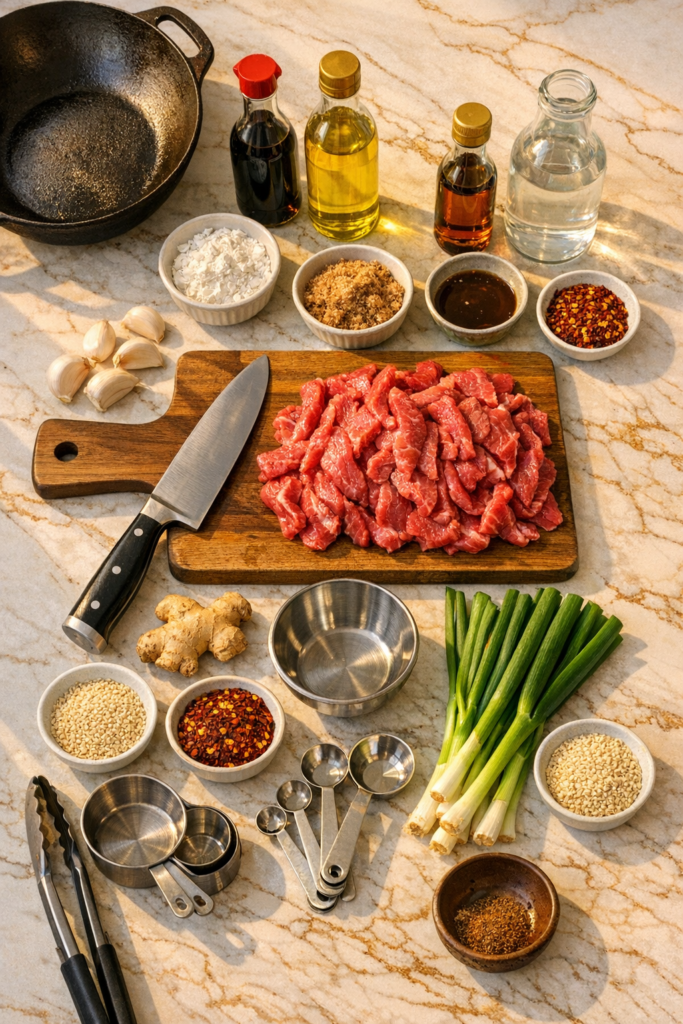
For the Beef
- 1 lb (450g) flank steak, thinly sliced against the grain
- ¼ cup cornstarch
- 2 tablespoons vegetable oil (for frying)
For the Sauce
- ½ cup low-sodium soy sauce
- ½ cup water
- ⅓ cup packed brown sugar
- 1 tablespoon sesame oil
- 4 cloves garlic, minced
- 1 teaspoon fresh ginger, grated (or ½ tsp ground ginger)
- 1 teaspoon red pepper flakes (optional, for heat)
For Finishing
- 3 green onions, sliced into 1-inch pieces
- Sesame seeds, for garnish
- Steamed white rice, for serving
Tools You’ll Need
- Sharp chef’s knife + cutting board
- Large wok or heavy-bottomed skillet (cast iron works great)
- Small mixing bowl (for the sauce)
- Shallow dish or zip-lock bag (for coating the beef in cornstarch)
- Tongs or chopsticks
- Measuring cups and spoons
- Grater or microplane (for fresh ginger)
Pro Tips
These are the things that make the difference between good Mongolian beef and can’t stop eating it Mongolian beef.
- Slice the beef against the grain. This is non-negotiable. Slicing with the grain gives you chewy, tough pieces. Against the grain gives you tender, melt-in-your-mouth bites. Take 30 extra seconds and do this right.
- Freeze your steak for 20 minutes before slicing. A slightly frozen steak is so much easier to slice thin. This one trick alone will change how evenly your beef cooks.
- Don’t crowd the pan. If you throw all the beef in at once, it steams instead of sears. Cook in two batches if needed. That golden, slightly crispy coating on the beef is what makes this dish — don’t skip it.
- Coat the beef just before cooking. If you let the cornstarch-coated beef sit too long, it gets sticky and clumps. Toss it right before it hits the pan.
- Let the sauce reduce properly. Give it a full 2-3 minutes to thicken before adding the beef back in. A thin sauce just doesn’t cling the same way.
Substitutions and Variations
Beef swaps: Flank steak is ideal, but sirloin, skirt steak, or even ribeye work well. Just keep slices thin.
Make it gluten-free: Swap regular soy sauce for tamari or coconut aminos.
Make it lower sodium: Use low-sodium soy sauce and reduce the quantity slightly. The dish will still have great depth.
Add vegetables: Broccoli, bell peppers, snap peas, or bok choy are all great additions. Toss them in after the sauce has reduced and cook for 2-3 minutes before adding the beef back.
Spice it up: Double the red pepper flakes or add a teaspoon of chili garlic sauce for more heat.
Swap the protein: This sauce works beautifully with chicken, shrimp, or even tofu for a vegetarian version.
Make-Ahead Tips
The sauce can be made up to 5 days in advance and stored in a jar in the fridge. This alone cuts your weeknight cook time in half.
The beef can be sliced and stored (uncoated) in the fridge for up to 24 hours before cooking.
Full meal prep: Cook the entire dish, store in an airtight container, and it reheats perfectly for lunches throughout the week.
Nutritional Breakdown (Per Serving, Approx.)
Based on 4 servings, without rice
| Nutrient | Amount |
|---|---|
| Calories | ~320 kcal |
| Protein | 26g |
| Carbohydrates | 22g |
| Fat | 13g |
| Sodium | ~780mg |
| Sugar | 16g |
Tip: To reduce sugar, cut the brown sugar to ¼ cup. The sauce will be less sweet but still incredibly good.
Meal pairings: Serve with steamed jasmine rice, fried rice, lo mein noodles, or cauliflower rice for a lower-carb option. A simple cucumber salad on the side balances out the rich sauce really nicely.
How to Make Mongolian Beef
Prep time: 10 minutes | Cook time: 20 minutes | Total: 30 minutes | Serves: 4
Step 1: Prep the Beef
Place your flank steak in the freezer for 15-20 minutes. Once slightly firm, slice it very thin (about ¼ inch) against the grain.
Pat the slices completely dry with paper towels — this is important for getting a good sear.
Step 2: Coat in Cornstarch
Add the beef slices to a shallow dish or zip-lock bag with the ¼ cup of cornstarch. Toss until every piece is evenly coated. Shake off any excess.
Step 3: Make the Sauce
In a small bowl, whisk together the soy sauce, water, brown sugar, sesame oil, garlic, ginger, and red pepper flakes. Set aside.
Step 4: Sear the Beef
Heat 1 tablespoon of vegetable oil in your wok or skillet over high heat until it shimmers.
Add half the beef in a single layer. Cook for 1-2 minutes per side until golden and slightly crispy. Remove and repeat with the second batch, adding the remaining oil.
Don’t move the beef around too much while it sears — let it develop that crust.
Step 5: Build the Sauce
Reduce heat to medium. Pour the sauce directly into the pan. Let it bubble and reduce for 2-3 minutes, stirring occasionally, until slightly thickened and glossy.
Step 6: Bring It All Together
Add all the beef back into the pan along with the green onions. Toss everything to coat. Cook for another 1-2 minutes until the beef is heated through and completely coated in the sauce.
Step 7: Serve
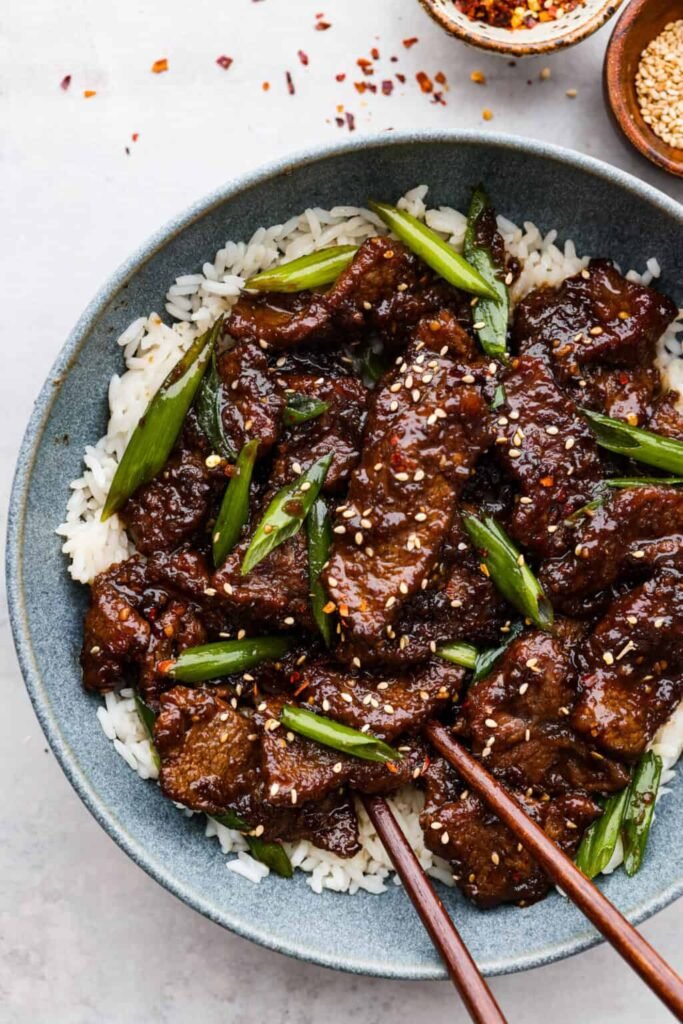
Plate over steamed rice, sprinkle with sesame seeds, and add extra green onions if you like. Eat immediately while it’s hot and glossy. 🙌
Leftovers and Storage
Fridge: Store in an airtight container for up to 4 days. The flavors actually deepen overnight, which makes this one of those dishes that’s arguably better the next day.
Freezer: Freeze for up to 2 months. Let it thaw overnight in the fridge before reheating.
Reheating: Warm on the stovetop over medium heat with a tiny splash of water to loosen the sauce. Microwaving works too — just do it in 30-second intervals so it doesn’t dry out.
Don’t store with rice if you can avoid it. The rice absorbs the sauce and turns mushy. Keep them separate until serving.
FAQ
Can I use a different cut of beef? Yes! Sirloin and skirt steak are both great alternatives. Avoid anything too thick or tough — thin, tender cuts are key here.
My sauce isn’t thickening. What happened? Make sure you’re cooking it over medium-high heat and giving it enough time. If it’s still thin after 3-4 minutes, mix 1 teaspoon of cornstarch with 1 tablespoon of water and stir it into the sauce.
Is this dish spicy? Not inherently. The red pepper flakes add a subtle warmth, but nothing intense. Leave them out entirely for a completely mild version.
Can I make this without a wok? Absolutely. A large cast iron skillet or stainless steel pan works perfectly. Just make sure it gets nice and hot before the beef goes in.
Do I have to use flank steak? Flank steak is the classic choice because it’s lean, flavorful, and slices beautifully. But sirloin, flat iron steak, or even beef chuck (sliced very thin) can all work.
Can I double the recipe? Yes, but sear the beef in smaller batches. Crowding a doubled batch will steam the meat instead of searing it and you’ll lose that crispy coating.
What’s the best rice to serve with this? Long-grain jasmine rice is a classic pairing. The slightly floral aroma complements the savory sauce. Brown rice, basmati, or sticky rice all work great too.
Wrapping Up
If you’ve been putting off making Asian-inspired recipes at home because they seem complicated — this one is going to change your mind completely.
Mongolian beef is fast, forgiving, and honestly just fun to make. That moment when the sauce hits the hot pan and starts bubbling and thickening and smelling incredible? It’s one of those cooking moments that makes you feel like you really know what you’re doing.
Make it once and it’ll be in your regular rotation. I’d bet on it.
Give it a try this week and drop a comment below to let me know how it went! Did you add veggies? Make it spicy? Swap the protein? I genuinely want to hear what you did with it. 👇
Hi, this is a comment.
To get started with moderating, editing, and deleting comments, please visit the Comments screen in the dashboard.
Commenter avatars come from Gravatar.