

Shatteringly crispy, sticky with sauce, and somehow even better than what you’d get at a Korean street stall.
By Grace Moser | Korean Food | Serves 4
30Prep Min
25Cook Min
4Servings
MediumDifficulty
558Cal / Serving
“I made this once and my friends asked me to never order takeout again.”
Korean fried chicken (called yangnyeom chicken or just KFC in Korea 😂) is the kind of food that makes you stop mid-bite and just… stare at it.
It’s double-fried. That’s the secret right there. Most fried chicken recipes fry once. Koreans fry twice, and that changes everything. The skin comes out so crispy it practically shatters, and then you coat it in this glossy, sweet-spicy-sticky sauce that somehow gets into every single crack.
This is genuinely one of those recipes where you’ll wonder why you ever paid delivery fees for it.
And honestly? It’s not even that hard. Once you’ve made it once, you’ll have it memorized.
What You’ll Need
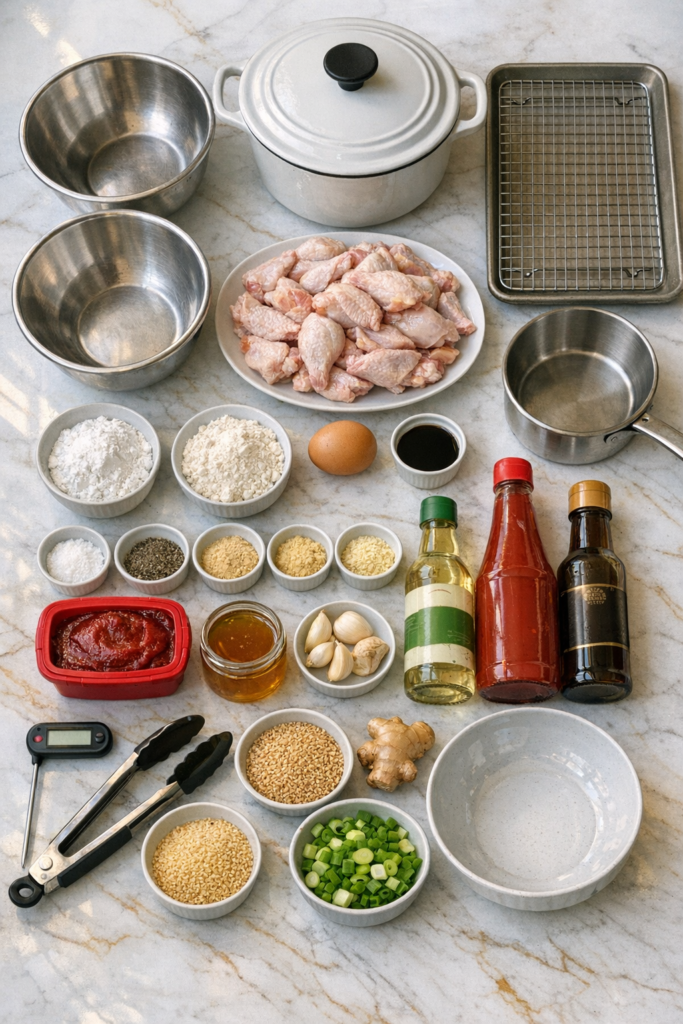
For the Chicken
- 2 lbs (900g) chicken wings or drumettes
- 1 tsp salt
- 1 tsp black pepper
- 1 tsp garlic powder
- 1 tsp ginger powder
- 1 tbsp soy sauce
- 1 egg, beaten
- 3/4 cup (90g) potato starch (preferred) or cornstarch
- 1/4 cup (30g) all-purpose flour
- Neutral oil for frying (vegetable or canola)
For the Yangnyeom Sauce
- 3 tbsp gochujang (Korean red pepper paste)
- 2 tbsp ketchup
- 2 tbsp soy sauce
- 2 tbsp rice vinegar
- 3 tbsp honey or corn syrup
- 1 tbsp sesame oil
- 4 cloves garlic, minced
- 1 tsp fresh ginger, grated
- 1 tbsp neutral oil
- Toasted sesame seeds (to garnish)
- 2 green onions, sliced (to garnish)
You can find gochujang at most Asian grocery stores, and increasingly in regular supermarkets in the international aisle. It comes in a red tub and it keeps for months in the fridge.
Pro Tips
1
Potato starch over cornstarch, always. It creates a thinner, crispier coating that stays crunchier for longer. Cornstarch works in a pinch, but potato starch is worth the extra trip.
2
Let the chicken rest between fries. After the first fry, let pieces rest on a wire rack for at least 5 minutes. That rest allows moisture to escape, making the second fry way more effective.
3
Don’t crowd the pot. Fry in batches of 4 to 5 pieces. Crowding drops the oil temperature and you’ll get soggy chicken. Patience here is actually rewarded.
4
Sauce goes on right before serving. If you toss the chicken in sauce too early, the coating softens. Coat it at the very last minute if you love maximum crunch.
5
Oil temperature is everything. First fry: 325°F (163°C). Second fry: 375°F (190°C). A cheap kitchen thermometer will save you from pale, undercooked or burnt chicken.
Tools You’ll Need
🍳Deep pot or Dutch oven
🌡️Kitchen thermometer
🥢Wire rack + baking sheet
🥣2 large mixing bowls
🍶Small saucepan
🥄Tongs or spider strainer
Substitutions and Variations
| Original | Swap | Notes |
|---|---|---|
| Chicken wings | Boneless thighs, tenders | Thighs stay juicier; adjust cook time slightly |
| Gochujang | Sriracha + miso paste | Not identical but still great |
| Honey | Maple syrup or agave | Works well, slightly different sweetness |
| Potato starch | Cornstarch | Still crispy, just slightly less airy |
| Regular version | Soy garlic (no gochujang) | Milder, equally addictive version |
| Deep fry | Air fryer at 400°F | Spray well with oil; still crispy but lighter |
If you’re cooking for kids or people who can’t handle heat, the soy garlic version is the move. Skip the gochujang entirely and double the garlic and soy sauce in the sauce. Still insanely good.
Make Ahead Tips
You can absolutely do the first fry in advance.
- Do the first fry, let the chicken cool completely on a wire rack
- Store in the fridge uncovered (or loosely covered) for up to 24 hours
- Do the second fry right before serving
- The sauce can be made 3 to 4 days ahead and stored in an airtight jar in the fridge
This is a game changer if you’re hosting. All the messy frying is done, and the second fry takes less than 5 minutes per batch.
Nutritional Breakdown (Per Serving)
| Nutrient | Amount | Nutrient | Amount |
|---|---|---|---|
| Calories | 558 kcal | Carbs | 42g |
| Protein | 34g | Sodium | 980mg |
| Fat | 28g | Sugar | 18g |
* Approximate values based on 2 lbs wings, 4 servings. Varies with oil absorption and exact ingredient brands.
Meal Pairing Suggestions
- Steamed white rice with a fried egg on top (very Korean!)
- Pickled daikon radish (the traditional side served with KFC in Korea)
- Simple cucumber salad with rice vinegar and sesame oil
- Cold beer or banana milk if you’re going full Korean
Fun fact: In Korea, the pairing of fried chicken and beer has its own name. Chimaek (chi from chicken + maek from maekju, meaning beer). It’s a national pastime.
How to Make Korean Fried Chicken
1
Marinate the Chicken
Pat your chicken completely dry with paper towels. In a large bowl, toss the chicken with salt, black pepper, garlic powder, ginger powder, soy sauce, and the beaten egg. Mix well and let it sit for at least 15 minutes (30 is better).
2
Make the Coating
In a separate bowl, whisk together potato starch and flour. Dredge each piece of chicken thoroughly in the mixture, pressing gently so it sticks. Shake off any excess. The coating should look thin and a little dusty, not thick and doughy.
3
First Fry (325°F / 163°C)
Heat at least 2 to 3 inches of oil in your pot to 325°F. Fry the chicken in batches for 7 to 8 minutes until it’s just cooked through and pale golden. It won’t look done yet, and that’s fine. Drain on a wire rack and rest for 5 to 10 minutes.
4
Make the Yangnyeom Sauce
While the chicken rests, heat 1 tbsp oil in a small saucepan over medium heat. Add minced garlic and grated ginger, cook for 60 seconds until fragrant. Add gochujang, ketchup, soy sauce, rice vinegar, and honey. Stir and simmer for 2 to 3 minutes until the sauce thickens slightly and turns glossy. Remove from heat and stir in sesame oil.
5
Second Fry (375°F / 190°C)
Raise the oil temperature to 375°F. Fry the chicken again in batches for 3 to 4 minutes until deeply golden and shatteringly crispy. This is where the magic happens. The double-fry method originated as a way to cook through thicker pieces, but the crispiness side effect is the real win here.
6
Sauce and Serve
Transfer the hot chicken to a large clean bowl. Pour the sauce over it and toss quickly to coat every piece. Plate immediately and top with toasted sesame seeds and sliced green onions. Serve within 10 minutes for maximum crunch.
Leftovers and Storage
- Fridge: Store in an airtight container for up to 3 days
- Reheat: Air fryer at 375°F for 4 to 5 minutes is the best method by far. Oven at 400°F for 8 to 10 minutes also works. Microwave will make it soft and sad.
- Freezer: Not recommended after saucing. If you want to freeze, do it after the second fry (before saucing) for up to 1 month
- Leftover sauce: Keeps for up to 2 weeks in a sealed jar in the fridge. Use it as a dipping sauce or stir-fry sauce
Frequently Asked Questions
Can I use an air fryer instead of deep frying?
You can. Spray the coated chicken generously with oil and air fry at 400°F for 12 to 15 minutes, flipping halfway. It won’t be identical to the deep-fried version, but it still gets genuinely crispy and is much lighter. The double-fry effect is harder to replicate, but one round at high heat does a solid job.
My coating kept falling off. What went wrong?
Two likely culprits: the chicken wasn’t dry enough before coating, or you didn’t press the starch mixture firmly onto each piece. Pat everything very dry and really press that coating in. Also, don’t move the pieces around in the oil for the first 60 seconds, that’s when the crust sets.
Where do I find gochujang if I’m not near an Asian grocery store?
Most large supermarkets now carry it in the international aisle. Whole Foods, Walmart, and Target have stocked it regularly in recent years. You can also order it online. The most widely available brand is CJ Haechandle, which comes in a red tub and costs around $4 to $6.
How spicy is this recipe?
At this ratio, the sauce is medium-spicy. The sweetness from the honey balances the heat considerably. For less heat, reduce gochujang to 1.5 tbsp and increase ketchup. For more heat, add a teaspoon of gochugaru (Korean red pepper flakes) to the sauce.
Can I prep this for a party?
Absolutely, and it’s genuinely a great party move. Do the first fry and make the sauce up to 24 hours in advance. When guests arrive, do the second fry in quick batches (takes about 15 minutes total) and sauce right before serving. You look like a pro and barely broke a sweat.
Is potato starch really that much better than cornstarch?
Honestly, yes. Potato starch creates a lighter, thinner, crispier shell that stays crunchy longer, especially once sauced. Cornstarch is still a good substitute, just slightly denser. If you can only find cornstarch, use it. But if you’re going to make this recipe more than once (you will), pick up potato starch.
Wrapping Up
Korean fried chicken is one of those recipes that genuinely surprises people every single time. The double-fry. The glossy, sticky sauce. The crunch that doesn’t quit.
Make it once on a random weeknight. Watch what happens to the people around your table.
If you give this recipe a try, drop a comment below and let me know how it went. Did you do the soy garlic version? Air fryer it? I genuinely want to hear, and so does everyone else who’s deciding whether to make this tonight.